How to Read Apple Watch Sleep Stages (Deep, Core, REM)
Deep, Core, and REM on Apple Watch are a sketch of one night. Compare last night to your own last 7 days, then change one thing tonight.
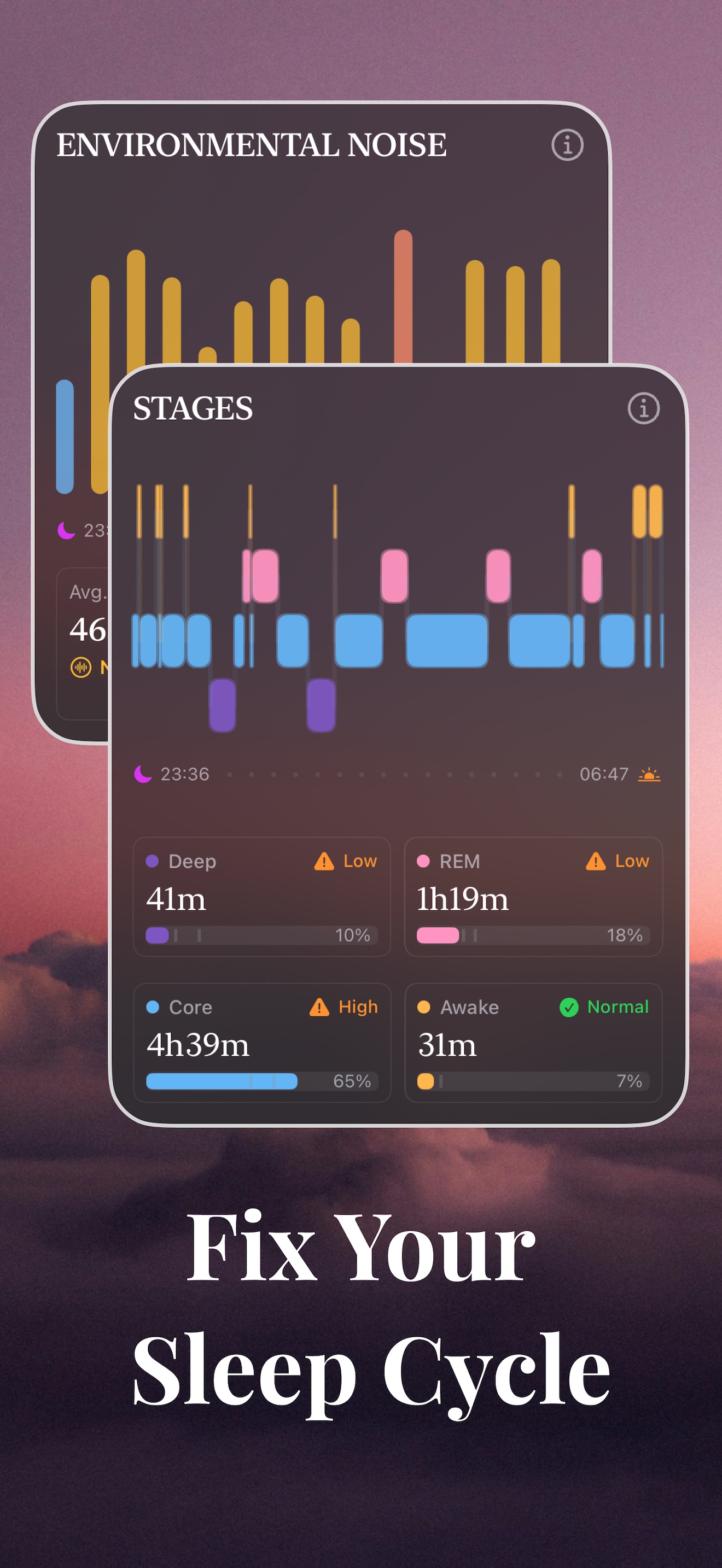
Apple Watch sleep stages are a consumer estimate of how last night split among Deep, Core, and REM. Read them as a sketch of one night, then compare that sketch to your own last seven days. They are not a lab sleep study, not a diagnosis, and not a score you have to win.
If you only remember one method: open last night, note time asleep plus Deep, Core, and REM, then ask whether those numbers sit inside your recent range. A low-Deep night that still matches your typical week is usually less interesting than a week that looks unlike your baseline.
What Deep, Core, and REM mean on Apple Watch
Apple Watch infers stages from motion and heart-rate patterns while you wear it to bed. Those results land in Apple Health. Apple uses three sleep labels plus Awake, and sometimes time in bed that was not sleep. Other apps may say light sleep where Apple says Core. Same night, different names.
Treat every minute as an estimate. Two similar nights can still look a little different on the chart. That noise is why a seven-day view beats a screenshot of a single pie.
Deep
Deep is the stage that usually looks like the stillest, hardest-to-rouse part of the night. People often connect it with feeling physically recovered — fewer heavy limbs, less of that I was in bed but my body did not reset feeling. On many charts, longer Deep blocks show up earlier. That pattern is a tendency, not a rule your Watch must follow.
Deep amounts move around. A later bedtime, alcohol, a hot room, a short night, or not feeling well can change the estimate. A single low-Deep night is not proof of a medical problem. A week of nights that look unlike your baseline, plus how you actually feel, is a better reason to pay attention — and still not a diagnosis.
Core
Core is Apple's large middle bucket. In other consumer apps this slice is often called light sleep. For most people, Core is the biggest piece of the pie, frequently more than half of time asleep. That is expected.
If Core looks too high, check the rest of the picture first. Did you sleep fewer hours? Go to bed much later than usual? Wake more often? Percentages on a short night exaggerate every slice because the pie is smaller. Trying to reduce Core as if it were a defect usually means chasing a number instead of a habit you can change tonight.
REM
REM (rapid eye movement) is the stage many people associate with vivid dreams and feeling mentally clearer. It often occupies more of the second half of the night, which is why an early alarm can cut REM more than Deep. Again: a tendency, not a law.
Evening alcohol, an irregular schedule, or a truncated morning can change REM on the Watch without telling a precise clinical story. Do not treat a REM percentage as a brain-health score.
Awake time on the chart is also an estimate. Brief awakenings you do not remember can appear as ticks or short blocks. Lots of those, plus feeling unrested, is more useful than any one stage label.
How to read last night — compared with your last 7 days
Start with last night, then zoom out to the week. The goal is not a perfect ratio. The goal is to see whether last night was a blip or a shift.
1. Open one source of truth
On iPhone, open Health, then Sleep — or the Sleep summary you already use. On Apple Watch, open the Sleep app. If you use SleepBestie, it reads the same Apple Health records after you grant access. You are not looking at a second sensor.
2. Read time asleep and stages together
Seven and a half hours with a familiar Deep, Core, and REM mix is a different night from five and a half hours with pretty percentages. Always glance at duration before you judge the pie.
3. Put last night next to the previous week
Ask three questions. Was Deep inside my usual band? Was REM lower only on the night I stayed up late or drank? Did awakenings cluster on noisy, hot, or irregular nights? Your baseline is your last seven days — not a ratio from someone else's screenshot.
4. Write down context, not a conclusion
Bedtime versus usual. Alcohol. Late caffeine. A very hard workout. Travel. Not feeling well. A weekend lie-in. These notes explain more than any color on the hypnogram, and they are the only levers you control tonight.
5. Look at the shape, not only the totals
The block chart shows when stages happened. Long awake gaps, constant tiny switches, or almost no Deep until dawn tell a richer story than a single percentage. Still remember: it is a wrist estimate.
If last night looks odd and the rest of the week looks like you, wait. If the whole week shifted and you feel worse, change one habit in the next section — or talk to a clinician if you are worried about a sleep disorder. This article will not tell you which medical condition you have.
Tonight, change only one thing
Pick a single experiment and keep it for about a week:
- Keep the same wake time every day, including after a late night, or
- Skip alcohol in the hours before bed, or
- Dim phones and bright overhead lights in the last 60 minutes.
Do not also overhaul caffeine, supplements, and bedding in the same week. You will not know what moved Deep versus REM versus how you feel. After seven nights, compare the new week to the previous one. Same total time? Different awakenings? Did REM look more like your baseline when you protected the morning?
If nothing changes and you still feel unwell, that is a reason to speak with a healthcare professional — not a reason to stack more trackers.
Where SleepBestie fits
SleepBestie interprets sleep stages already stored in Apple Health. It can place last night beside your recent average and highlight one small next step. It does not replace Apple Watch sensors, does not run a clinical sleep study, and is not a medical device.
See last night next to your recent average
SleepBestie reads Deep, Core, and REM from Apple Health and helps you notice what shifted — without pretending to be a new sensor.
Download SleepBestie FreeRelated reading
- Apple Watch sleep tracker: how SleepBestie uses Watch data
- SleepBestie FAQ: Apple Health, privacy, and setup
- A different question: why a long night can still feel unrested
Disclaimer: This article is for general information only and is not medical advice, diagnosis, or treatment. Apple Watch sleep stages are consumer estimates. If you have ongoing sleep problems, loud snoring, gasping, or daytime sleepiness that worries you, talk to a qualified clinician.