Consistent Wake Time: Why Midweek Drift Makes You Foggy
Foggy Wednesday is not always a short night. If you woke 60–90 minutes later than Monday, your body clock may have shifted. Hold one wake time for the next four mornings.
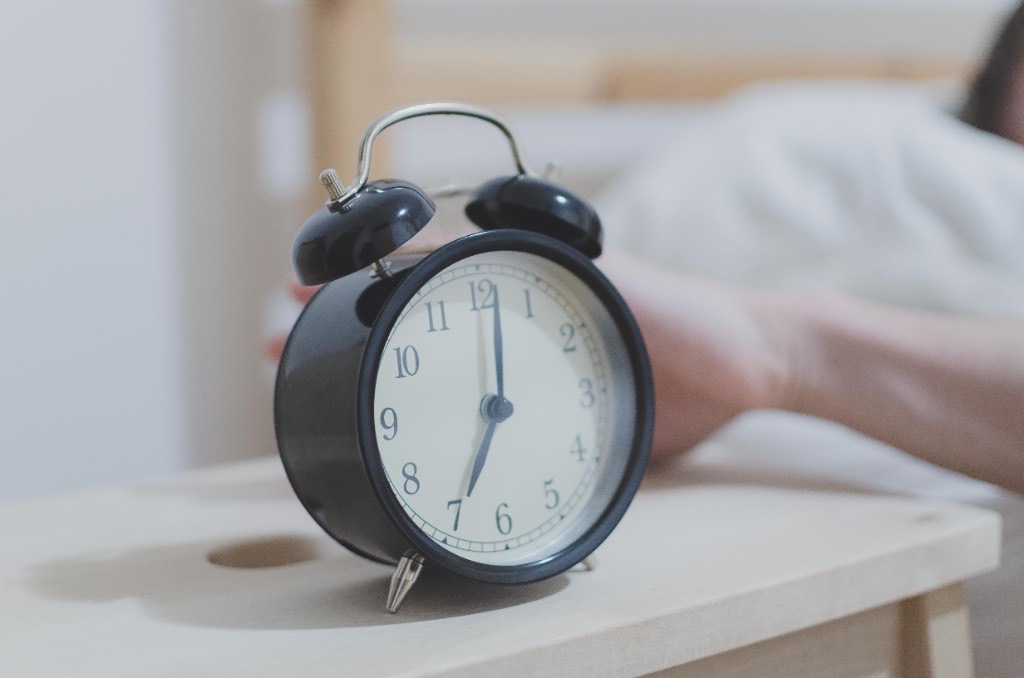
Midweek fog is not always a short night. If your actual get-up time has slid 60 to 90 minutes later than Monday, your body clock has been nudged — even when the total hours still look fine. Sleeping enough and still feeling unrested has many causes. This article is only about wake-time drift, not that whole list.
If you only remember one check: write down when you actually got out of bed this week, not when the alarm was set. A later Thursday than Monday is a moved clock. The fog often follows the slide, not a missing hour on the tracker.
Schedule drift is a mini time-zone shift
Your internal clock does not only count hours slept. It also tracks when those hours land. Push wake time later, and the "morning" your body expected arrives after you already need to think, commute, or sit in a meeting. That mismatch feels like a small jet lag — groggy, a bit out of phase, hungry or sleepy at odd times — without anyone changing the wall clock.
People sometimes call the weekend version social jet lag: stay up and sleep in on Saturday, then yank the clock back for Monday. The weekday version is quieter. Tuesday snooze, Wednesday "just 20 more minutes," Thursday a late night that forces a late morning. By Friday you have traveled a time zone in place. You did not fail at sleep. You moved the schedule.
This is a tendency, not a diagnosis. Some people feel a 45-minute slide. Others barely notice 90. Night-shift work, illness, a new baby, or travel are different problems. Do not treat one foggy office day as proof that your clock is "broken." Treat a week of later and later get-ups as a lever you can test.
A midweek self-check
You do not need a lab. You need five timestamps. Open Health, your Watch sleep card, or a notes app and list actual wake time — when you stood up, not when you first peeked at the phone.
- Write Monday through today: actual wake, roughly to the nearest 15 minutes.
- Circle the earliest weekday. Compare the latest. A 60–90 minute gap is the drift this article is about.
- Glance at total time asleep on those same nights. If hours were similar but you felt worse on the later mornings, duration was not the whole story.
- Note one context line: late work, a drink, a lie-in after a short Tuesday. Context explains the slide. It does not require a medical conclusion.
If the line of wake times is climbing, that is your experiment target. If wake times are already tight and you still feel unrested, this lever may not be the one — other articles on this blog cover different questions.
A four-morning experiment: one wake time
Change only this lever. If you also overhaul caffeine, screens, and bedtime in the same stretch, you will not know what moved. Pick a wake time you can defend on a work morning — not a fantasy 5 a.m., not the Saturday lie-in. Then keep it still.
- Choose one wake time. Write it down. Set one alarm. Snooze counts as a later wake.
- Hit that time for the next four mornings, including tomorrow if you are reading this at night.
- Get daylight in your eyes soon after standing up if you can. You do not need a protocol. A window or a short outdoor walk is enough of a cue that morning has started.
- Then fold the weekend into the same window: try to keep Saturday and Sunday within about one hour of the weekday wake. Catch-up sleep can still happen with an earlier bedtime, not only a late get-up.
- Each morning, note fog on a 1–5 scale and when you actually stood up. After four mornings, compare to this week's drifting days. If the fog eased, keep the window. If nothing moved, wake time may not be your main lever this month.
The one-hour weekend band is a starting experiment, not a rule carved on the fridge. Shift workers and parents of infants will need a looser version. The point is to stop the quiet daily slide, not to win a perfect calendar.
Where SleepBestie fits
SleepBestie reads bedtime, wake time, and sleep-score style summaries already stored in Apple Health from your Watch. During a consistent-wake stretch, it helps you see whether the get-up line flattened and whether the score moved next to your recent average — so you are not guessing from one Wednesday. It does not replace a clinician, does not diagnose a circadian disorder, and is not a medical device.
See whether your wake time is sliding
SleepBestie uses Apple Watch and Apple Health data to show bed and wake trends plus sleep score — useful when you want to compare a consistent-wake week with the drifting one.
Download SleepBestie FreeRelated reading
- Why a long night can still feel unrested — other levers besides the clock
- Afternoon coffee and bedtime: a different timing experiment
- How to read Apple Watch Deep, Core, and REM without chasing one night
- SleepBestie FAQ: Apple Health, privacy, and setup
- AI sleep coach: asking what changed this week
Disclaimer: This article is for general information only and is not medical advice, diagnosis, or treatment. Sleep timing varies widely by person, job, and family life. If you have ongoing sleep problems, extreme sleepiness, or a schedule you cannot safely change, talk to a qualified clinician.